Empowering Precision Diagnostics
Bringing ImmunoGuide ELISA technologies to Europe and beyond
Validated ELISA kits for therapeutic drug monitoring and anti-drug antibody detection, for clinical labs, research institutions, and biotech teams. For Research Use Only.

Featured ELISA kits
Drug-level and anti-drug antibody assays across TNF-alpha, VEGF, EGFR, HER2, and more.
ADALIMUMAB ELISA
Analyte: Adalimumab
View kitADALIMUMAB ELISA (MAB-BASED)
Analyte: Adalimumab
View kitAFLIBERCEPT ELISA
Analyte: Aflibercept
View kitANTIBODY TO ADALIMUMAB ELISA
Analyte: Adalimumab
View kitANTIBODY TO BEVACIZUMAB ELISA
Analyte: Bevacizumab
View kitANTIBODY TO CERTOLIZUMAB PEGOL ELISA
Analyte: Certolizumab Pegol
View kitFrom our journal
Background on ELISA methods, therapeutic drug monitoring, anti-drug antibodies, and assay validation.
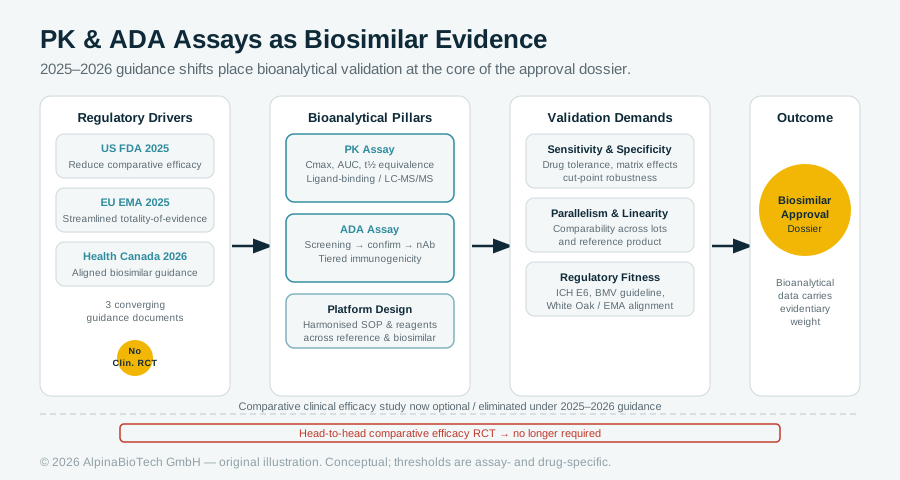
When PK and ADA Assays Become the Whole Argument: Biosimilar Regulatory Reform and What It Demands from Bioanalytical Scientists
Regulatory agencies in the US, EU, and Canada moved in 2025 and 2026 to reduce or eliminate comparative efficacy studies for biosimilar approval, placing pharmacokinetic and anti-drug antibody assays at the center of the evidentiary dossier. This article examines the three converging guidance documents, the validation demands they create, and the platform-level design principles scientists need to build biosimilar bioanalytical programs that can carry that evidentiary weight.
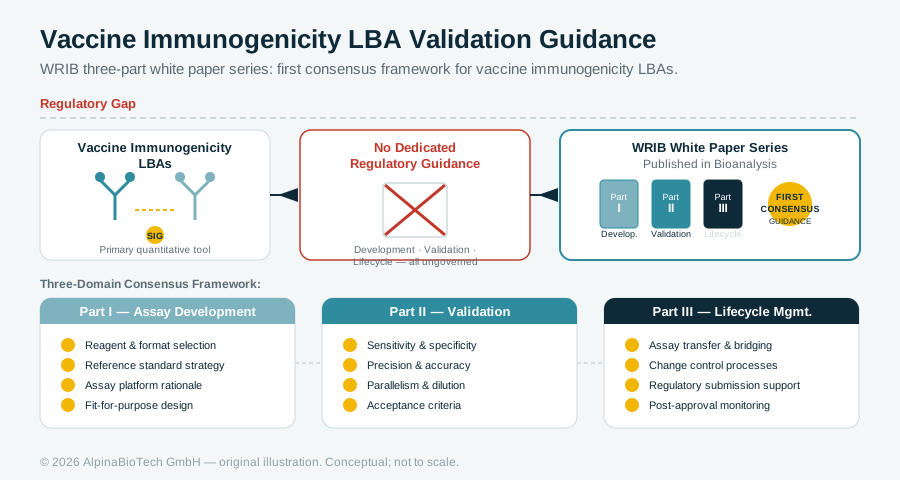
Vaccine Immunogenicity LBAs Have No Dedicated Validation Guidance: A Three-Part WRIB Series Sets Out to Change That
Ligand binding assays are the primary quantitative tool for vaccine immunogenicity studies, yet no dedicated regulatory framework has governed their development, validation, or lifecycle management. A three-part WRIB white paper series, now fully published in Bioanalysis, provides the first consensus-based guidance covering all three domains specifically for vaccine immunogenicity LBAs.

Enzyme Activity Assays in Rare Disease Drug Programs: Design, Validation, and Interpretation Across Four Clinical Contexts
A single enzyme activity assay format cannot equally serve diagnosis, pharmacokinetics, pharmacodynamics, and gene therapy efficacy readouts in lysosomal storage disorder programs. A 2026 review in Bioanalysis and supporting primary literature clarify how assay purpose, matrix, and immunogenicity monitoring must be aligned before validation begins. This article is for Research Use Only.